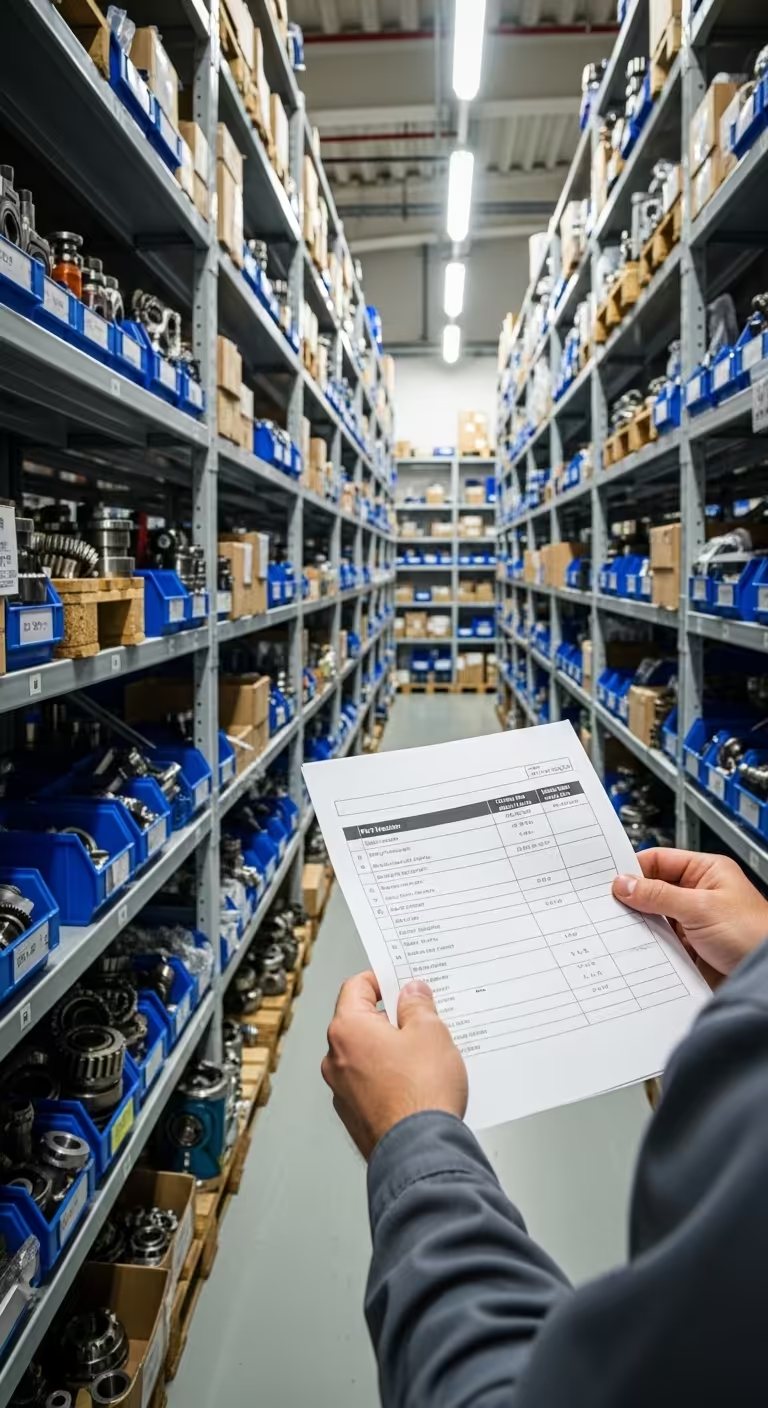
“The most expensive spare part is the one you don’t have when you need it.”
Plant availability is critical to business sustainability and profitability. Unplanned downtime directly impacts production output, customer commitments, operating costs, and ultimately, revenue. One of the primary contributors to increased Mean Time to Repair (MTTR) is the unavailability of required spare parts at the time of equipment failure.
When essential components are not readily available, repair activities are delayed, equipment remains idle, and operational losses escalate. Therefore, preventing business disruptions caused by spare parts shortages must be a strategic priority for every industrial organization.
Is Keeping All Spare Parts the Solution?
A common suggestion is to stock all possible spare parts in inventory to eliminate the risk of shortages. While this approach may appear efficient, it is not necessarily effective.
Keeping excessive inventory may reduce the likelihood of stockouts, but it also introduces significant financial and operational burdens. Capital becomes tied up in slow-moving or obsolete items. Storage, insurance, handling, and deterioration costs increase. In addition, excessive inventory can hide inefficiencies in forecasting, maintenance planning, and reliability practices.
Efficiency means storing parts properly.
Effectiveness means storing the right parts.
The Importance of Effective Spare Parts Management
Spare parts availability directly influences plant reliability, repair time, and overall operational performance. However, simply increasing stock levels is not a sustainable solution.
Proper spare parts management enables organizations to maintain plant availability, control costs, and support long-term business profitability. The right strategy ensures that the right spare part is available at the right time — without overburdening the business with unnecessary inventory.